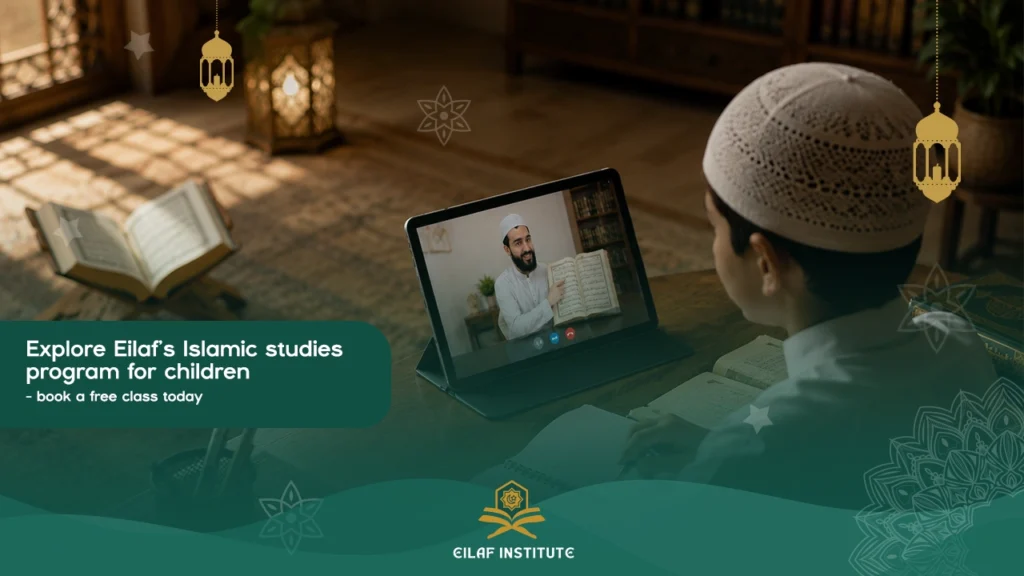
An Islamic studies course for kids online provides a structured digital environment where children learn the fundamentals of faith, worship, and prophetic history through interactive lessons. These courses bridge the gap for families living in areas without easy access to traditional Islamic schools, offering a flexible yet comprehensive way to build a strong Muslim identity. By utilizing modern educational tools, an online Islamic education course for kids ensures that religious learning is engaging, consistent, and adapted to the specific needs of young learners.
Islamic Studies Course for Kids Online: What Should Children Learn?
A high-quality Islamic studies curriculum must cover the core pillars of Islam, the biography of the Prophet Muhammad (PBUH), and the practical application of ethics in daily life. Instead of focusing solely on memorization, these courses aim to foster a deep love for Allah and an understanding of why specific religious practices are observed.
Essential Islamic Beliefs and Values
The foundation of any course is Aqidah (creed), which teaches children about the oneness of Allah, the angels, the revealed books, and the prophets. Understanding these beliefs helps children develop a logical framework for their faith. Lessons often focus on the names and attributes of Allah, helping children recognize His presence in the world around them through nature and personal blessings.
Daily Worship and Islamic Manners
Learning the mechanics of worship, such as how to perform Wudu and Salah, is a practical requirement for every Muslim child. Beyond the physical acts, courses emphasize Akhlaq (character) and Adab (etiquette). This includes teaching children how to speak truthfully, respect their parents, and show kindness to animals and the environment, mirroring the behavior of the Prophet (PBUH).
Stories from the Quran and Seerah
What do kids learn in Islamic studies that stays with them forever? Usually, it is the stories of the prophets and the Seerah (biography) of Prophet Muhammad (PBUH). These narratives are not just historical accounts; they are used to extract moral lessons about patience, bravery, and perseverance. Engaging storytelling helps children relate to these figures as role models for their own lives.
Age-Appropriate Islamic Studies for Different Learning Stages
Teaching methods must evolve as a child’s cognitive abilities grow, moving from simple stories to more complex discussions about law and philosophy. A one-size-fits-all approach rarely works, so effective programs categorize lessons based on developmental milestones.
What Children Aged 5–8 Need Most
At this early stage, the primary goal is to build a positive emotional connection with Islam. Lessons should be short, colorful, and filled with activities that celebrate the joy of being a Muslim.
- Simple Supplications: Teaching short Duas for eating, sleeping, and waking up.
- Creative Arts: Using drawing or coloring to learn about Islamic symbols.
- Basic Concepts: Introducing the concept of Halal and Haram through food and behavior.
Building Deeper Understanding for Ages 9–13
As children approach adolescence, they begin to ask more “why” questions, requiring a more intellectual approach to religious education. This stage focuses on the reasoning behind Islamic laws and the history of the Islamic civilization.
- Fiqh Basics: Detailed study of the rules of fasting, Zakat, and Hajj.
- Contemporary Issues: Discussing how to maintain Islamic values while navigating social media and peer pressure.
- Critical Thinking: Analyzing the wisdom behind Quranic verses and how they apply to modern challenges.
Red Flags to Watch Out For in Online Islamic Courses
Parents must be vigilant when selecting a program, as not all online platforms maintain high educational standards. Some courses may be disorganized or fail to provide the personal attention a child needs to thrive.
A Curriculum That Lacks Structure
If a program does not have a clear, written syllabus that parents can review, it often leads to scattered learning. A lack of structure means the student might repeat the same basic topics every year without progressing toward more advanced concepts. Ensure the course has a defined start, middle, and end point for each level.
Limited Student Engagement
An Islamic education course for kids should not be a one-way lecture where the teacher talks and the student listens passively. If the class size is too large or the teacher does not encourage questions, children will quickly lose interest. Look for programs that prioritize small groups or one-on-one sessions to ensure every child has a voice.
No Clear Progress Tracking
Without regular assessments or feedback, it is impossible to know if a child is actually retaining what they learn. Programs that lack quizzes, homework assignments, or parent-teacher meetings often result in stagnant growth. A reliable course will provide monthly or quarterly reports on the child’s strengths and areas for improvement.
Read also about: How To Learn Islam Step By Step?
How Eilaf’s Islamic Studies Program Is Structured?
The Eilaf program focuses on creating a balanced educational experience that integrates academic rigor with a nurturing environment. The structure is designed to be intuitive, ensuring that children can navigate their learning journey with confidence and clarity.
A Curriculum Designed for Young Learners
Eilaf uses a tiered curriculum that aligns with international educational standards while remaining rooted in authentic Islamic scholarship. Each lesson is broken down into manageable modules that prevent students from feeling overwhelmed. The program covers everything from the basics of faith to the complexities of Islamic history, ensuring a well-rounded education.
Interactive Lessons and Ongoing Support
To keep students engaged, Eilaf utilizes digital whiteboards, educational games, and multimedia presentations. This interactive approach makes learning about Islam feel like an adventure rather than a chore. Furthermore, the program offers continuous support through dedicated student portals where children can access resources and teachers can provide personalized guidance.
Choosing the Right Islamic Studies Program for Your Child
The best choice depends on your child’s current knowledge level, their personality, and your family’s long-term religious goals. It is important to find a program that feels like a partnership between the educators and the parents.
Matching the Course to Your Child’s Age
Ensure the language used by the tutors is appropriate for your child’s vocabulary. A New Muslim Converts Course might be necessary for families who have recently embraced Islam, as these courses explain concepts from the ground up without assuming prior knowledge. Always check if the program offers a trial lesson to see if the teaching style matches your child’s pace.
Balancing Knowledge, Practice, and Character
A successful Islamic studies course for kids online should aim for a balance between three key areas:
- Knowledge: Learning the facts and rules of the religion.
- Practice: Encouraging the child to actually perform their prayers and fast.
- Character: Developing the “Muslim personality” characterized by honesty and compassion.
If a course focuses too heavily on one area while neglecting the others, the child’s religious development will be incomplete.
What topics are covered in Islamic studies for kids?
A standard course covers Aqidah (belief in Allah and His prophets), Fiqh (the rules of worship like prayer and fasting), Seerah (the life of the Prophet), and Akhlaq (moral behavior and manners). Some courses also include basic Arabic and Quranic Tafseer.
How many subjects does a kids’ Islamic course typically cover?
Most comprehensive programs cover 5 to 7 core subjects. These are usually integrated into a single curriculum that touches upon different themes each week, ensuring the child receives a holistic education rather than studying only one topic in isolation.
Is Islamic studies online as good as in a mosque school?
Online studies can be just as effective, and sometimes more so, due to the ability to use interactive digital tools and provide one-on-one attention. While mosque schools offer physical community, online courses offer flexibility, a structured curriculum, and access to highly qualified teachers from around the world.