
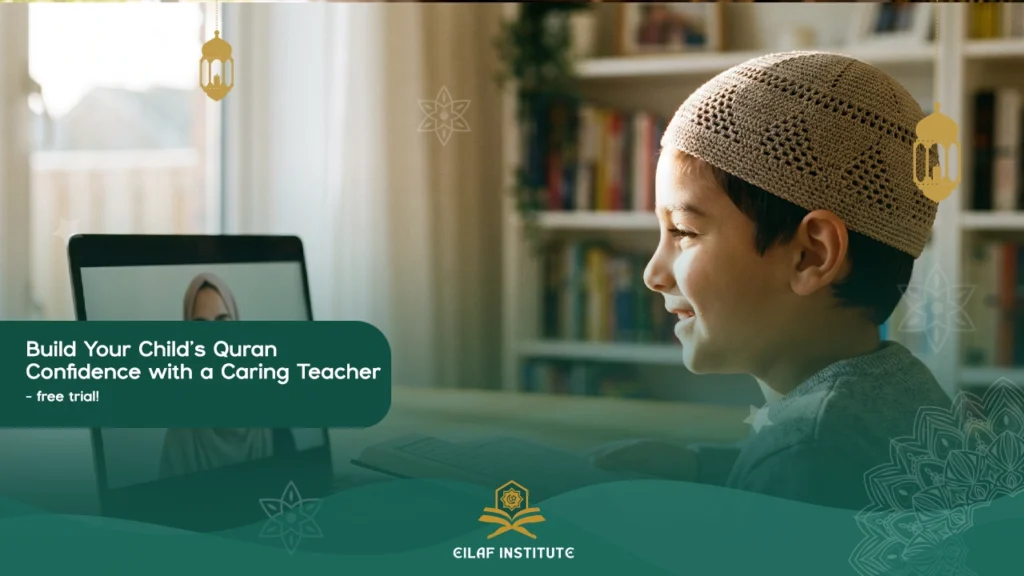
How to build Quran reading confidence in kids! It starts by transforming the learning experience from a high-pressure task into a journey of self-discovery and spiritual growth. When children feel capable and supported, they are more likely to engage with the text voluntarily and develop a lifelong bond with the Book of Allah. Building this confidence requires a delicate balance of technical guidance, emotional support, and a structured environment that allows for mistakes without judgment.
Why Some Kids Lack Confidence in Quran Reading
Children often struggle with confidence when they feel overwhelmed by the complexity of Arabic phonetics or when they fear being criticized for their errors. Understanding the root causes of this hesitation is the first step toward creating a more encouraging learning atmosphere.
Fear of Making Mistakes in Tajweed
Many students view the Quran as so sacred that they become paralyzed by the fear of “disrespecting” it through incorrect pronunciation. This pressure often leads to shy kids’ Quran sessions where the child barely whispers for fear of getting a vowel or a rule wrong. They need to understand that the effort of learning is highly rewarded in itself.
Negative Feedback or Harsh Correction
If a child has been previously corrected with a loud voice or a frustrated tone, they may develop a defensive mechanism. Instead of focusing on the words, their brains focus on avoiding a negative reaction from the teacher or parent. This significantly diminishes the Quran reading confidence children need to progress.
Comparing Themselves to Peers
In group settings, children often compare their speed or fluency with others. If a child sees their friends moving to higher levels faster, they may start to believe they are simply “bad” at reading, which leads to a total loss of Quran motivation kids might have had at the start.
How to build Quran reading confidence in kids: 7 Strategies
Building confidence involves using effective ways to start reading the Quran that prioritize the child’s psychological comfort alongside their academic progress. By breaking down the process into smaller, manageable wins, you can help a child feel a sense of mastery early on.
1. Start with Short, Easy Surahs
Begin with the shortest chapters of Juz Amma that have repetitive rhythms and simple vocabulary. When a child successfully completes a small Surah, they feel a tangible sense of achievement that fuels their desire to continue.
2. Use the “Repeat After Me” Technique
Before asking a child to read independently, have them follow your lead or a recording. This “Talaqqi” method allows them to hear the correct sounds first, which reduces the anxiety of tackling a new verse alone. It is one of the most effective ways to start reading the Quran for beginners.
3. Focus on Fluency Before Perfection
Do not stop a child for every minor Tajweed error during their first reading of a verse. Let them get through the sentence to understand the flow. Once they feel they can “read” the words, you can gently circle back to refine the technical rules.
4. Create a Daily Ritual
Consistency is the enemy of anxiety. When reading the Quran becomes a regular, 10-minute part of the daily routine, it loses its “scary” or “special event” status. Familiarity breeds comfort, and comfort leads to confidence.
5. Visual Aids and Colorful Mushafs
Using a Mushaf designed for children, with color-coded Tajweed rules and larger fonts, makes the task seem less daunting. Visual cues provide a “roadmap” that helps the child navigate the text with less mental strain.
6. Storytelling for Context
Explain the stories behind the verses they are reading. When a child understands the “why” and “who,” they feel a deeper connection to the text. This moves the focus from “mechanically decoding sounds” to “engaging with a story,” which naturally boosts interest and confidence.
7. Providing a Safe Reading Environment
Allow the child to read in a quiet, comfortable space where they know they won’t be interrupted or overheard by others who might judge them. Privacy is often the best cure for shy kids’ Quran behavior.
Role of Positive Reinforcement
Positive reinforcement is the fuel that drives Quran motivation, helping Kids overcome the initial hurdles of learning a new language. Celebrating progress, no matter how small, shifts the child’s focus from what they are doing wrong to what they are doing right.
Using Non-Material Rewards
While small treats can work, the most powerful rewards are verbal praise and shared quality time. Phrases like “I love how clearly you pronounced that letter” or “I am so proud of your patience today” build a child’s internal self-esteem.
Constructive Criticism vs. Correction
Instead of saying “That’s wrong,” try saying “That was a great try; let’s try to make the ‘Ha’ sound a bit deeper together.” This collaborative approach makes the child feel like you are on their team rather than acting as a judge.
How Parents Can Help at Home
The home environment is where the foundation of faith is built, and parents play a critical role in showing the importance of reading Quran through their own actions. When a child sees their parents reading with love and consistency, they naturally want to emulate that behavior.
Modeling Reading Behavior
If a child never sees their parents holding the Quran, they will view it as a school subject rather than a life skill. Encourage Quran kids by letting them catch you reading. They will learn that it is a source of peace for you, which makes them want to find that same peace.
Reading Together
Create a “Buddy Reading” system where you read one verse, and the child reads the next. This shared activity removes the “performance” aspect and turns it into a bonding experience. It also allows you to provide subtle Quran reading confidence to children without it feeling like a formal lesson.
Emphasizing the Importance of Reading the Quran
Talk about how the Quran helps us in our daily lives, from giving us peace to teaching us how to be kind. When the Quran is integrated into daily conversations, the child views the act of reading as a meaningful and valuable skill rather than a chore.
How Eilaf101 Nurtures Every Child
Eilaf101 understands that every child has a unique emotional blueprint, and our teaching methods are specifically designed to build the Quran reading confidence children need to excel. We don’t just teach letters; we nurture the heart of the young reciter.
The Quran Reading Course for Kids Approach
Our specialized Quran reading Course For Kids is built on a foundation of patience and pedagogical expertise. We use interactive tools that make learning feel like a collaborative discovery, ensuring that children are always eager for their next session. We prioritize the students’ comfort, ensuring they never feel pressured to perform beyond their current capability.
Expert Mentors for Shy Kids Quran
Our teachers are trained to handle shy kids Quran students by using gentle encouragement and specialized “ice-breaking” techniques. By building a strong personal rapport first, our tutors create a “brave space” where children feel safe to try, fail, and eventually succeed. If you want to see your child transform from a hesitant reader into a confident, fluent reciter, enroll them in our program and witness the difference that professional, heart-centered teaching makes.
My child refuses to read the Quran. What should I do?
First, identify the source of the refusal. It is often due to feeling overwhelmed or bored. Try reducing the session to just five minutes a day, use a more colorful Mushaf, and focus heavily on stories and rewards rather than just rules. Make sure the environment is stress-free and that they aren’t being compared to others.
How do I encourage a shy child?
Shy children benefit most from one-on-one sessions where they don’t have to worry about an audience. Use positive reinforcement and avoid correcting every single tiny mistake in the beginning. Once they feel they can trust their teacher and themselves, their natural voice will emerge.
Does a teacher’s personality affect confidence?
Absolutely. A teacher’s personality is perhaps the most significant factor in a child’s confidence. A warm, patient, and encouraging teacher can make a child love the Quran, while a stern or impatient teacher can cause a child to withdraw and lose interest entirely.