
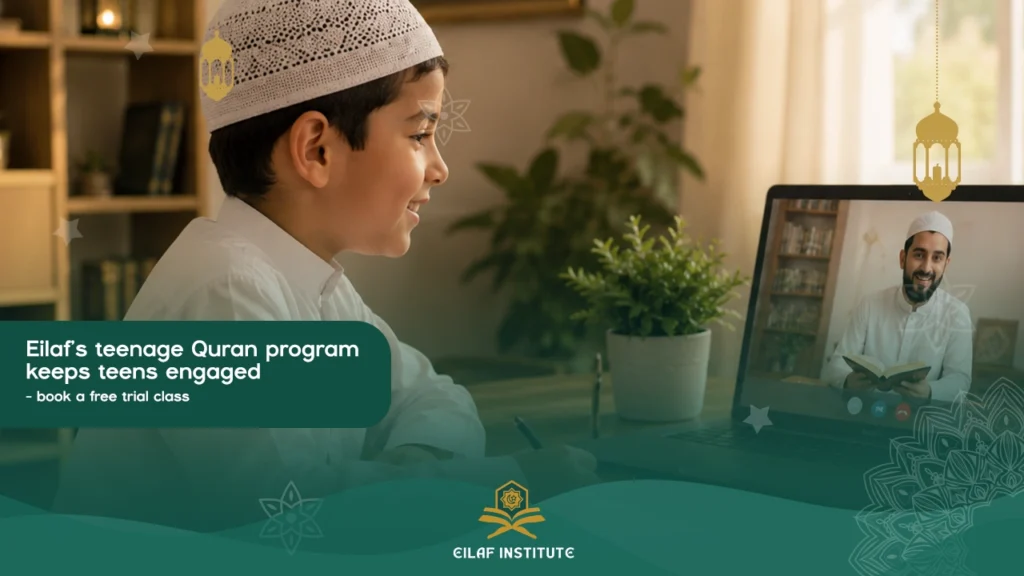
Online Quran classes for teenagers provide a specialized educational environment where young adults can move beyond basic recitation to explore the deeper meanings and practical applications of the Holy Quran. At Eilaf Institute, we recognize that teenagers are at a crossroads of identity and independence, so our classes shift from the repetitive learning style used for younger children to an inquiry-based approach that addresses the unique questions and pressures of the teenage years.
Common Challenges Teenagers Face with Quran Learning
The primary challenges teenagers face include time management with heavy school loads, the feeling that they started “too late,” and a disconnect between the Quranic text and their modern social environment. These obstacles can make the Quran feel like a separate, distant part of their lives rather than an integrated companion.
The “Late Start” Anxiety
Many teens feel embarrassed if they haven’t mastered the Quran by age 13 or 14. They compare themselves to those who started in early childhood and feel they have missed the boat. It is crucial to reassure them that the Prophet’s Sahaba often started their Quranic journey as adults. The journey is about sincerity, not just a race against time.
Distraction and Digital Fatigue
Compare the teenager’s mind to a crowded library where new books (school subjects, social media, hobbies) are being added every hour. If the Quran isn’t categorized as a “priority book,” it gets buried under the noise.
- Competing Priorities: Sports, exams, and social lives leave little room for traditional, long-form learning.
- Attention Spans: Constant digital stimulation makes the slow, meditative process of Hifz feel difficult.
Cultural Disconnect
For those looking for Islamic education teenagers UK or in other Western countries, there is often a gap between the traditional teaching styles and the English-speaking teenage culture. If the teacher cannot speak the “language” of the teen—not just linguistically, but culturally—the message might not land effectively.
Online Quran Classes for Teenagers: Why They Need a Different Approach to Quran?
Teenagers require a different approach because their cognitive and emotional needs have evolved from the foundational stages seen in online Quran classes for toddlers ages 3-5.
While a toddler learns through sound and imitation, a teenager seeks relevance, logic, and a sense of purpose. If the teaching method doesn’t evolve with the student, the Quran can feel like a chore rather than a guide.
-
From Mechanics to Meaning
In online Quran classes for kids ages 6-10, the primary focus is often on perfecting reading fluency and basic Tajweed. However, for a teenager, simply reciting words without understanding the “why” behind the message can lead to a lack of engagement. A teenager needs to know how a specific verse relates to their struggles with peer pressure, social media, or mental health.
-
Intellectual Engagement
Teenagers are developing critical thinking skills. They want to ask questions about the context of the verses and the history of the Prophets. A modern teenage Quran course must facilitate these discussions, turning the classroom into a safe space for spiritual and intellectual exploration.
-
Autonomy and Ownership
Unlike younger children who follow a parent’s schedule, teenagers thrive when they feel they have a say in their learning. Giving them a choice in their recitation goals or allowing them to choose a teacher they resonate with creates a sense of ownership over their religious journey.
What a Good Teen Quran Course Looks Like?
Mentorship, flexible scheduling, and a curriculum that balances Tajweed with Tafsir (explanation) characterize a high-quality teenage Quran course. It should feel less like a traditional lecture and more like a coaching session that empowers the student to grow at their own pace.
Mentorship-Based Instruction
A teacher for teenagers should act as a mentor. This means:
- Relatability: The ability to discuss real-life issues through a Quranic lens.
- Encouragement: Focusing on progress and effort rather than just pointing out mistakes.
- Active Listening: Allowing the student to express their doubts or questions without judgment.
Integration of Tafsir and Application
A good course doesn’t just ask a teen to “read”; it asks them to “reflect.”
- Daily Application: How does Surah Al-Kahf apply to modern trials?
- Thematic Lessons: Grouping verses that talk about character (Akhlaq), patience, or friendship.
- Vocabulary Building: Helping the student understand key Quranic terms so they can begin to feel the power of the words they recite.
Flexibility for Busy Lifestyles
Online learning offers the unique benefit of fitting into a gap in a busy school schedule. Whether it’s a 30-minute session before a football match or a weekend deep-dive, the structure must be adaptable to the high-pressure environment teenagers live in.
How Eilaf Engages Teenage Students?
Eilaf Institute engages teenagers by utilizing Quran for teens online strategies that prioritize connection over completion. We use modern teaching tools and highly qualified tutors who specialize in the psychology of young adults, ensuring that every session feels productive and spiritually uplifting.
Interactive and Modern Tools
We move away from static PDF files and use interactive whiteboards and digital apps that make learning dynamic. This matches the way teenagers learn other subjects in school, making the Quran class feel modern and relevant.
Personalized Learning Roadmaps
Every teenager at Eilaf has a unique roadmap.
- The Hifz Track: For those who want to focus on memorization with a structured revision plan.
- The Fluency Track: For those who want to perfect their recitation and Tajweed.
- The Understanding Track: For those who want to focus on the translation and context of the verses.
Building a Supportive Community
We foster an environment where the student feels part of something bigger. By celebrating milestones and providing a platform where they can see others their age pursuing the same goals, we reduce the feeling of isolation that some teenagers feel when practicing their faith.
How do I get my teenager interested in Quran?
Interest starts with relevance. Instead of focusing only on the quantity of pages read, try focusing on the meaning of a single Surah. Connecting with a relatable teacher who understands their culture and challenges can also transform their attitude toward the Quran from a chore into a source of support.
Is it too late for a 14-year-old to start memorizing Quran?
It is never too late. At 14, a person’s cognitive ability to understand and memorize is actually much stronger than a child’s. While a 5-year-old might memorize faster through repetition, a 14-year-old can memorize more deeply because they can use logic, patterns, and meaning to help anchor the verses in their mind.
What Quran courses are designed for teens?
Courses designed for teens usually focus on “Tafseer-lite” (simplified explanation), Tajweed correction, and character building. These courses, like the ones offered at Eilaf Institute, bridge the gap between basic reading skills and adult-level Islamic scholarship, making the content accessible and engaging for the 13-19 age group.