
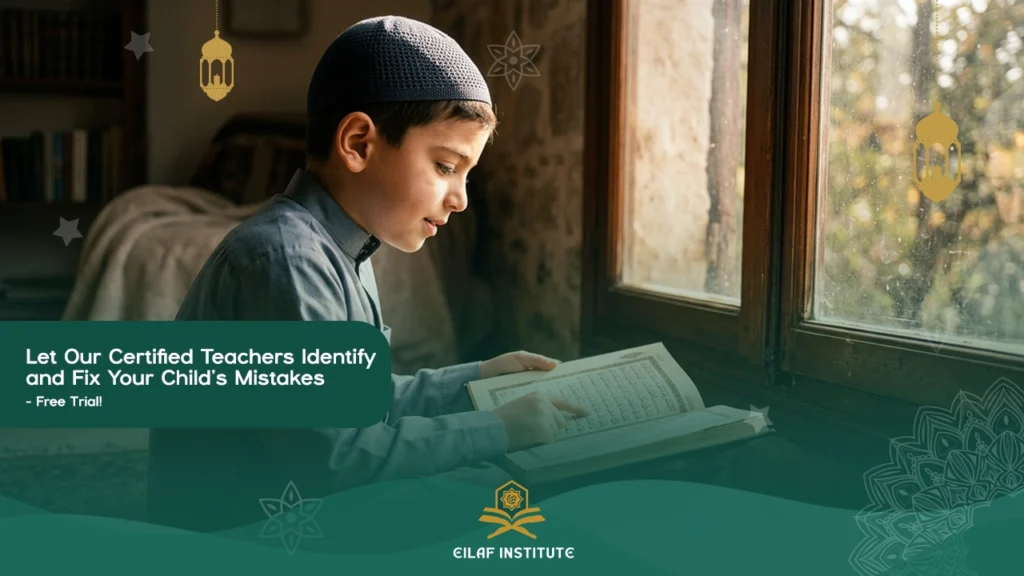
Parents place a high value on their children’s ability to read the Book of Allah, yet the journey of learning often involves several hurdles in pronunciation and rhythm. While young learners are remarkably adaptable, they frequently encounter specific challenges that lead to Common Quran recitation mistakes kids make, such as mixing up heavy and light letters or rushing through vowels. Identifying these errors early allows parents and teachers to implement Fixing Quran Recitation Mistakes effectively, ensuring the child develops a recitation that is both accurate and spiritually moving.
The Top 10 Common Quran recitation mistakes kids make
The most frequent errors children encounter usually involve a lack of distinction between similar-sounding letters and the inconsistent application of Tajweed rules like prolongation and nasalization. Addressing these Common Quran Recitation Errors requires a systematic approach to phonetics and patience.
- Swapping Heavy and Light Letters (Tafkheem and Tarqeeq): Children often struggle to distinguish between letters like “Ta” (ت) and the heavier “Twa” (ط), or “Seen” (س) and “Saad” (ص). This is one of the most frequent Common Tajweed Mistakes seen in beginners.
- Skipping or Shortening Madd (Prolongation): Kids frequently forget to stretch vowels for the required two, four, or six counts, making the recitation sound choppy and potentially changing the word’s meaning.
- Ignoring the Ghunnah (Nasal Sound): The two-beat nasal sound in letters like “Noon” and “Meem” with a Shaddah is often missed, stripping the recitation of its rhythmic beauty.
- Omitting the Qalqalah (Bouncing Sound): When a letter like “Qaaf” or “Ba” has a Sukoon, it requires a “bounce.” Many children read these letters flatly without the necessary vibration.
- Confusing Similar Articulation Points: Errors often occur with letters that share similar origins in the mouth, such as “Thal” (ذ), “Zay” (ز), and “Zwa” (ظ).
- Misreading the Harakaat (Short Vowels): Children may accidentally swap a Fatha for a Kasra or a Dammah, especially when they are trying to read quickly.
- Rushing the Recitation: Speed is a major cause of Pronunciation Errors Children Make When Reading the Quran. Rushing leads to skipping letters and merging words incorrectly.
- Incorrect Stopping (Waqf): Many kids stop in the middle of a word or at a point where the meaning becomes incomplete because they run out of breath.
- Pronouncing Silent Letters: In Arabic, some letters are written but not pronounced (like the Alif in certain plurals). Kids often try to pronounce every letter they see on the page.
- Monotone Recitation: While not a “sinful” mistake, a lack of rhythmic flow makes it harder for the child to engage emotionally with the verses.
Why do these Tajweed Mistakes Happen?
Most recitation errors stem from a lack of muscle memory in the tongue and throat, combined with the influence of the child’s primary language phonetics. Because many Arabic sounds do not exist in English or other European languages, the child’s brain naturally tries to substitute a familiar sound for a foreign one.
- Influence of Native Language: A child used to the English “T” will naturally use it for both the Arabic “Ta” and “Twa” unless specifically trained otherwise.
- Lack of Focused Listening: If a child does not listen to high-quality recitation regularly, they won’t have a mental “template” for how the words should sound.
- Developmental Factors: Younger children are still developing their fine motor skills, which include the precise movements of the tongue and lips required for Tajweed.
How Proper Tajweed Corrects Recitation Errors
Tajweed provides a structured framework that guides children on how to position their tongue correctly and how much breath to use for every single letter. It serves as a corrective tool, guiding the student from “guessing” the sound to producing it with mathematical precision.
Here are Some Tips to improve Quran recitation :
- Focusing on Makharij: Teaching the child the physical “exit point” of the sound.
- Slow Recitation (Tarteel): Encouraging the child to slow down helps them notice the symbols above the letters.
- Color-Coded Feedback: Using visual aids to highlight where a rule (like Ghunnah or Madd) needs to be applied.
Why a Qualified Teacher Makes a Difference
A qualified teacher has a trained ear that helps identify subtle mistakes that parents may not notice, such as slight tongue placement errors or incorrect articulation points.
Online learning platforms also give children access to specialists who can provide immediate, live feedback, which is essential for fixing Quran Recitation Mistakes before they become long-term habits.
In addition, a teacher applies the traditional Talaqqi method, where the child watches the teacher’s mouth movements and carefully imitates the sounds.
This direct guidance is one of the most effective ways to correct Pronunciation Errors Children Make When Reading the Quran and ensure mistakes are addressed at their source.
How Eilaf101 Helps Children Improve Their Recitation with Confidence
The Eilaf101 curriculum is specifically designed to break down complex Tajweed rules into small, achievable steps that children can understand. It also provides:
Building Confidence Through Positive Guidance
Our tutors focus on strengthening the child’s confidence, ensuring they feel encouraged and proud of their progress rather than discouraged by errors.
Personalized Attention and Continuous Practice
Through regular practice sessions and individualized feedback, children gradually improve their recitation accuracy, fluency, and consistency.
Join Our Expert-Led Quran Recitation Program
Give your child the opportunity to develop a flawless and melodious recitation by enrolling in our expert-led online Quran recitation course today.
At What Age Should Children Start Learning Tajweed to Avoid Common Mistakes?
The best age to start is usually between 5 and 7 years old. At this stage, children are linguistically flexible enough to adopt correct pronunciation naturally, which prevents many common errors from developing in the first place.
How Long Does It Take to Correct Quran Recitation Errors?
The timeline varies depending on the child’s age and the frequency of practice. Generally, with consistent lessons twice a week, most major pronunciation errors can be significantly improved within 3 to 6 months.
How Often Should Children Practice Tajweed to Improve Their Pronunciation?
Short, daily practice sessions are much more effective than one long session per week. Aim for 10 to 15 minutes of focused recitation every day to build the muscle memory required for correct Tajweed.