
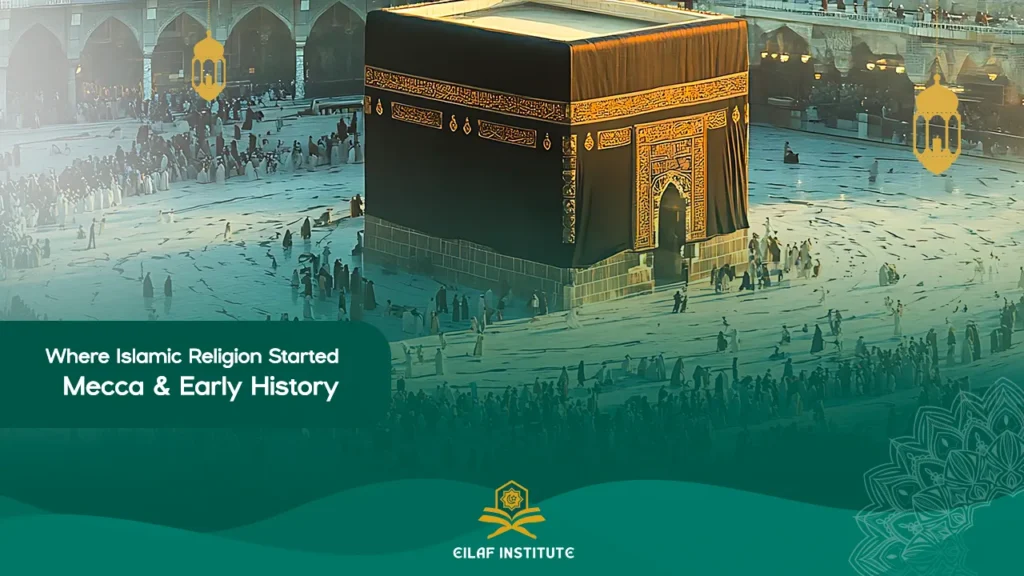
The Islamic religion started in the city of Mecca, located in the Arabian Peninsula, during the early 7th century. Today, this region is known as Saudi Arabia, and it serves as the definitive geographical and spiritual origin of Islam. Understanding the origin of Islam is much like tracing a mighty, flowing river back to its very first mountain spring.
This guide explores Where Did Islamic Religion Start, the profound early events, and the resilient early Islamic community that shaped one of the world’s most prominent global religions.
Where Did Islamic Religion Start?
The Islamic religion started in the Arabian Peninsula, specifically within the bustling trade city of Mecca, around the year 610 CE. This arid desert region became the absolute starting point for a monotheistic faith that would eventually reach across the entire globe.
The history of Islam is deeply and permanently rooted in this specific Middle Eastern geography. During the 7th century, the Arabian Peninsula was a harsh, unforgiving environment that created a highly resilient and deeply tribal society.
The Birth of Islam in Mecca
The birth of Islam in Mecca occurred when Prophet Muhammad ﷺ began receiving divine messages calling for the worship of a single God. Mecca officially served as the cradle where the foundational principles of pure monotheism were first preached to humanity.
- Pre-Islamic Society: The city was entirely dominated by strict tribal loyalties, social hierarchies, and idol worship long before the origin of Islam reshaped the culture.
- A Revolutionary Call to Monotheism: The new religious message called for the exclusive worship of one God, effectively challenging the existing social, economic, and political order of the city.
- The Chosen Sanctuary: Mecca was carefully selected as the birthplace of Islam, acting as a spiritual seed planted in the desert that would eventually grow into a vast tree, providing spiritual shade to billions of people.
The First Revelation to Prophet Muhammad ﷺ
Prophet Muhammad’s first revelation took place in the Cave of Hira on Mount Nur, where the Angel Gabriel commanded him to “Read.” This monumental historical event in 610 CE marked the official beginning of his prophethood and the Islamic faith.
Before this extraordinary event, Prophet Muhammad ﷺ frequently retreated to this quiet mountain cave for deep reflection, seeking distance from the bustling, materialistic city life of Mecca. He was troubled by the moral decay of his society. The revelation was a profound moment of divine connection that changed human history forever.
- The Cave of Hira: This isolated location served as a quiet, peaceful sanctuary where the Prophet sought mental clarity and deep contemplation.
- The Angelic Encounter: The Angel Gabriel delivered the very first verses of the Quran, bringing divine light to a society lost in spiritual darkness.
- A Heavy Responsibility: This specific moment was exactly like a bright spark igniting a lantern; it single-handedly began the gradual illumination of the entire Arabian Peninsula.
Book now: Islamic History Course
Early Challenges and Spread of Islam
The early spread of Islam faced severe, organized opposition from Meccan tribal leaders who greatly feared losing their economic and religious influence. Despite harsh physical and social persecutions, the unified message slowly gained devoted followers among truth-seekers.
- Fierce Opposition: Early Muslims faced crippling economic boycotts, severe physical harm, and intense social isolation from their own families.
- Steadfast Faith: Much like a heavy ship firmly anchoring through a violent ocean storm, the early believers held tightly to their faith despite the severe daily trials.
- Gradual and Secret Growth: The religion initially spread in complete secrecy, moving carefully by word of mouth among close friends, trusted associates, and immediate family members.
The Migration to Medina (Hijrah) and Establishment of the Muslim Community
The Migration to Medina, historically known as the Hijrah, occurred in 622 CE and marked the establishment of the very first sovereign early Islamic community. This necessary relocation allowed Muslims to practice their faith freely and organize a highly structured, functional society.
Leaving their beloved home of Mecca was a painful but absolutely necessary step for the survival of the Muslims. Medina, which was originally called Yathrib, warmly welcomed the Prophet ﷺ and his followers with open arms.
-
A Safe and Welcoming Haven:
Medina provided a peaceful, secure environment where the heavily persecuted Muslims could finally breathe, worship freely, and thrive collectively.
-
Organized Community Building:
The Prophet ﷺ established a formal constitution in Medina, legally uniting different religious and ethnic tribes under a banner of mutual defense and mutual respect.
-
The Islamic Calendar:
The Hijrah was so incredibly significant to the history of Islam that it permanently became the official starting point of the Islamic lunar calendar. Think of this migration as the exact moment a young, fragile plant is moved to rich, fertile soil to grow without any restrictions.
Read also about: Unveiling The Facts About The Quran
Key Teachings of Early Islam
The core message of Islam was simple yet profoundly revolutionary for its specific era. It actively dismantled the oppressive tribal class system that favored the wealthy and elite. By elevating the status of the marginalized, Islam created a fair, balanced, and highly ethical societal structure.
- Absolute Oneness of God: The primary theological focus was the absolute unity of Allah, firmly rejecting all forms of idolatry and superstition.
- Uncompromising Social Justice: The faith strictly demanded fair, equitable treatment for vulnerable groups, particularly orphans, widows, and the extremely poor.
- Universal Brotherhood: Islam taught that no single person is inherently better than another based on race, color, or wealth, acting as a great, universal equalizer in a deeply divided world.
How Islam Spread Beyond the Arabian Peninsula?
Islam spread beyond the Arabian Peninsula through a highly effective combination of international trade, peaceful diplomatic treaties, and organized state expeditions. The religion quickly and successfully moved across vast continents, reaching North Africa, Europe, and deep into Asia.
- Extensive Trade Routes: Muslim merchants carried their faith along the famous Silk Road and maritime routes, introducing Islam to distant lands like Indonesia through honest, ethical business practices.
- Diplomatic Treaties: Strategic alliances and fair treaties with neighboring regions facilitated peaceful coexistence and mutual cultural understanding.
- The Appeal of Justice: People from different collapsing empires willingly embraced the religion because it offered a clear, logical theology and social equality, functioning much like a refreshing rain reviving dry, exhausted lands.
Significance of Islam’s Origins Today
Mecca and Medina history is not merely a collection of stories from the distant past; it is a vibrant, living reality for modern Muslims. The early struggles of the first community continue to offer profound lessons in morality, patience, and unwavering faith.
- Daily Prayers: Muslims around the globe physically face the city of Mecca five times every single day, maintaining a continuous, unbroken connection to the very origin of Islam.
- The Hajj Pilgrimage: Millions of believers travel to Mecca annually, faithfully retracing the exact historical steps of Prophet Muhammad ﷺ.
- Timeless Guiding Principles: The early historical struggles and ultimate triumphs serve as a timeless, practical blueprint for patience, resilience, and faith in today’s modern world.
Know more about: Prophets Family Tree In Islam
FAQ
Where does the religion Islam originate from?
The religion of Islam originates from the city of Mecca in the Arabian Peninsula, which is located in modern-day Saudi Arabia. It officially began in the early 7th century when Prophet Muhammad ﷺ received the first divine revelations from God.
The specific geographical origin of Islam plays a central, ongoing role in daily Islamic practices, especially determining the direction of daily prayers and hosting the annual global pilgrimage.
Who first introduced the Islamic religion?
Prophet Muhammad ﷺ first introduced the Islamic religion to the people of Mecca in the year 610 CE. Acting as the final appointed messenger of God, he was specifically chosen to receive the Quran and teach the strict principles of monotheism.
His lifelong dedication successfully established the early Islamic community and firmly laid the unshakeable groundwork for the global spread of the faith.