
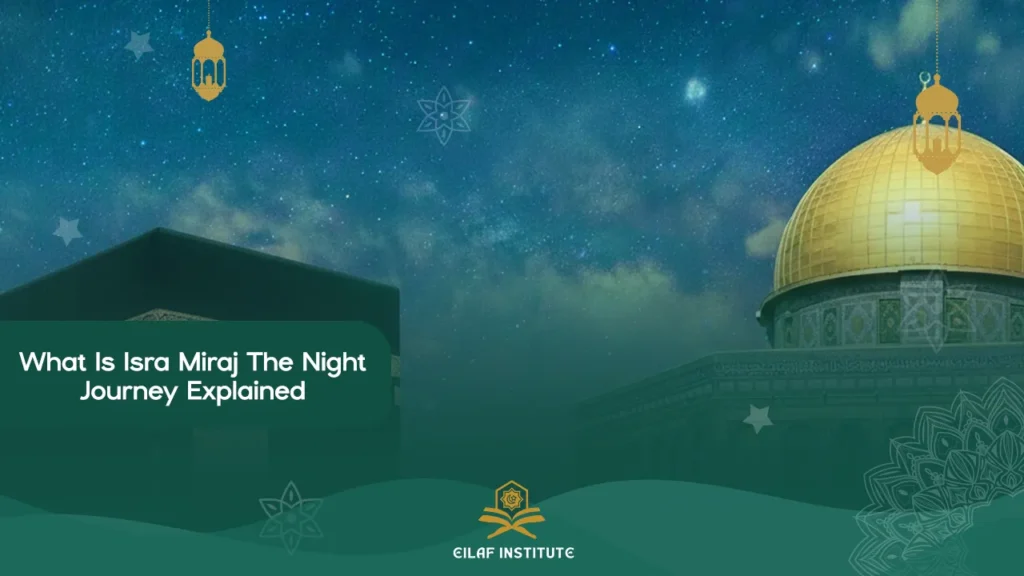
What is isra miraj? This event refers to the miraculous two-part night journey of the Prophet Muhammad (peace be upon him) from the Great Mosque in Makkah to the Al-Aqsa Mosque in Jerusalem, followed by his ascension through the seven heavens to the Divine Presence. This extraordinary event is a cornerstone of Islamic belief, representing a moment of profound spiritual elevation, divine consolation, and the formal establishment of the five daily prayers.
What is isra miraj in Islam?
In the Islamic tradition, al isra wal miraj is viewed as one of the greatest miracles bestowed upon the Prophet Muhammad.
- What does “Isra” mean? The term Isra refers to the “Night Journey” across the earth. It specifically describes the horizontal travel from Makkah to Jerusalem.
- What does “Mi’raj” mean? The term Mi’raj refers to the “Ascension” or the “Ladder.” It describes the vertical journey from Jerusalem up through the various levels of heaven to the highest point of creation.
- Is it mentioned in the Quran? Yes, the first part of the journey is explicitly mentioned in Surah Al-Isra (Chapter 17, Verse 1), while the second part is alluded to in Surah An-Najm (Chapter 53).
- How do Muslims view this event? It is regarded as a physical and spiritual reality, demonstrating the Prophet’s unique status and the limitless power of Allah.
The Story of Isra and Mi’raj Explained Simply
The isra and miraj story begins during a period of deep personal trial for the Prophet Muhammad. One night, while he was resting near the Kaaba in Makkah, the Angel Jibreel (Gabriel) appeared to him.
- The Departure: The Angel Jibreel presented the Prophet with the Buraq, a white, winged creature described as being smaller than a mule but larger than a donkey, capable of covering vast distances in a single stride.
- Arrival in Jerusalem: The Prophet rode the Buraq to the site of the Al-Aqsa Mosque in Jerusalem. This location is central to the significance of isra and miraj because it links the sanctuary in Makkah with the sacred land of the prophets in Palestine.
- Leading the Prayer: Upon arriving, the Prophet Muhammad entered the mosque and found all the previous prophets gathered there. He led them in prayer, symbolizing his role as the final messenger and the leader of all prophets.
- The Ascension: Following the prayer, the Prophet began the miraj journey explained by scholars as an ascent through the celestial spheres, meeting different prophets at each level until reaching the Divine Presence.
Why Did Isra and Mi’raj Happen?
Understanding the context of this journey is essential for anyone studying a Seerah Of prophet Muhammad Course. The journey served several divine purposes:
- Divine Consolation: The journey took place after the “Year of Sorrow,” during which the Prophet lost his beloved wife Khadijah and his protective uncle Abu Talib. It was a gift from Allah to comfort him and remind him of his high status.
- A Test of Faith: The event served to distinguish those with unwavering faith from those who doubted the Prophet’s message.
- Confirmation of Authority: By leading the previous prophets in prayer, Muhammad’s role as the seal of the prophets was solidified.
- The Gift of Salah: One of the primary reasons for the ascension was to receive the commandment for the five daily prayers, which serve as a direct link between the believer and the Creator.
When Did Isra and Mi’raj Take Place?
Historical accounts vary regarding the exact date, but the general consensus among scholars provides a specific timeframe:
- In which year did it occur? Most scholars agree it happened around 10 to 12 years after the Prophet began receiving revelation, shortly before the Hijrah (migration) to Madinah.
- Which month is celebrated? The 27th night of the Islamic month of Rajab is the traditional date observed by many Muslims worldwide.
- What was the context? It happened at a time when the early Muslim community in Makkah was facing intense persecution and social isolation.
- How long did it take? Despite the immense distance and the travel through multiple heavens, the entire journey was completed within a small portion of a single night.
What Happened During the Night Journey of Isra and Mi’raj?
To understand what happened during isra and miraj, one must look at the specific encounters the Prophet had during his ascension through the seven heavens.
The Meetings in the Seven Heavens
- First Heaven: The Prophet met Prophet Adam, the father of humanity.
- Second Heaven: He met Prophet Yahya (John the Baptist) and Prophet Isa (Jesus).
- Third Heaven: He met Prophet Yusuf (Joseph), who was described as having been given half of all beauty.
- Fourth Heaven: He met Prophet Idris (Enoch).
- Fifth Heaven: He met Prophet Harun (Aaron).
- Sixth Heaven: He met Prophet Musa (Moses).
- Seventh Heaven: He met Prophet Ibrahim (Abraham), who was leaning against the Al-Bait al-Ma’mur, a celestial house of worship.
The Sidrat al-Muntaha
Beyond the seventh heaven, the Prophet reached the “Lote Tree of the Furthest Boundary.” This is the point where even Angel Jibreel could not pass. Here, the Prophet experienced a direct communication with Allah, receiving the command for the prayers that would become a fundamental part of The Five Pillars of Islam course.
The Religious Significance of Isra and Mi’raj in Islam
The significance of isra and miraj extends beyond the miracle itself. It established several core theological foundations in Islam:
- The Sanctity of Jerusalem: The journey solidified Jerusalem’s status as a holy city in Islam, making it the first Qibla (direction of prayer).
- The Centrality of Prayer: The fact that prayer was ordained in the heavens, rather than on earth, highlights its importance. It is the only obligation that required the Prophet to ascend to the Divine Presence to receive it.
- Universal Brotherhood: The meeting with all previous prophets emphasizes the continuity of the divine message from Adam to Muhammad.
- Spiritual Potential: The journey demonstrates that human beings, through the grace of God, can reach spiritual heights that transcend the physical world.
Lessons Muslims Learn from Isra and Mi’raj
There are numerous lessons from isra and miraj that continue to inspire believers today:
- Patience and Hope: Just as the Prophet was honored after his greatest period of grief, Muslims believe that “with hardship comes ease.”
- The Power of Prayer: The journey reminds Muslims that Salah (prayer) is their own personal “Mi’raj”, a way to spiritually ascend and connect with Allah daily.
- Steadfastness: When the Prophet returned and told the people of Makkah about his journey, he faced mockery. His steadfastness in the face of disbelief is a lesson in standing by the truth.
- Scientific and Spiritual Harmony: The journey encourages believers to reflect on the vastness of the universe and the limitations of human knowledge compared to Divine wisdom, a topic often explored in an Islamic History Course.
How Isra and Mi’raj Strengthen Faith in Islam
The isra and miraj in islam functions as a powerful catalyst for strengthening faith (Iman). It challenges the boundaries of logic and physical laws, asking the believer to trust in the Infinite Power of Allah.
- The Role of Abu Bakr: When the skeptics of Makkah asked Abu Bakr if he believed Muhammad’s claim, he famously replied that if the Prophet said it, it must be true. This earned him the title “Al-Siddiq” (The Truthful).
- Validation of the Unseen: For many, this event makes the concept of the Unseen (Ghaib), including angels, heavens, and the afterlife, more tangible and certain.
- A Source of Pride: Knowing that their Prophet was granted an honor never given to any other human being provides Muslims with a sense of dignity and divine connection.
Common Misunderstandings About Isra and Mi’raj
Due to the miraculous nature of the night journey of the Prophet Muhammad, several misconceptions often arise:
- Was it just a dream? While some early scholars discussed this, the overwhelming consensus of the Ummah is that the journey was both physical and spiritual.
- Did the Prophet see Allah? Scholars have debated this for centuries. Most agree that while he experienced a direct Divine Presence and communication, the nature of “seeing” Allah is beyond human comprehension and differs from physical sight.
- Is the 27th of Rajab a mandatory holiday? While many Muslims commemorate the night with extra prayers and storytelling, it is not an “Eid” or a mandatory religious festival like Eid al-Fitr. It is a time for reflection and education.
- Did he only visit Jerusalem? No, the journey included the Al-Aqsa Mosque and the subsequent ascension through the seven heavens.
FAQ
What happened during Isra Wal Miraj?
During Al Isra Wal Miraj, the Prophet Muhammad traveled from Makkah to Jerusalem on the Buraq. In Jerusalem, he led the prophets in prayer. Afterward, he ascended through the seven heavens, meeting various prophets at each level, until he reached the Sidrat al-Muntaha and spoke with Allah, receiving the command for the five daily prayers.
Why is Isra and Mi’raj important in Islam?
It is important because it demonstrates the Prophet’s supreme status, establishes the five daily prayers, and highlights the spiritual connection between the Kaaba in Makkah and the Al-Aqsa Mosque in Jerusalem. It serves as a reminder of Allah’s power and a source of hope for believers facing adversity.