
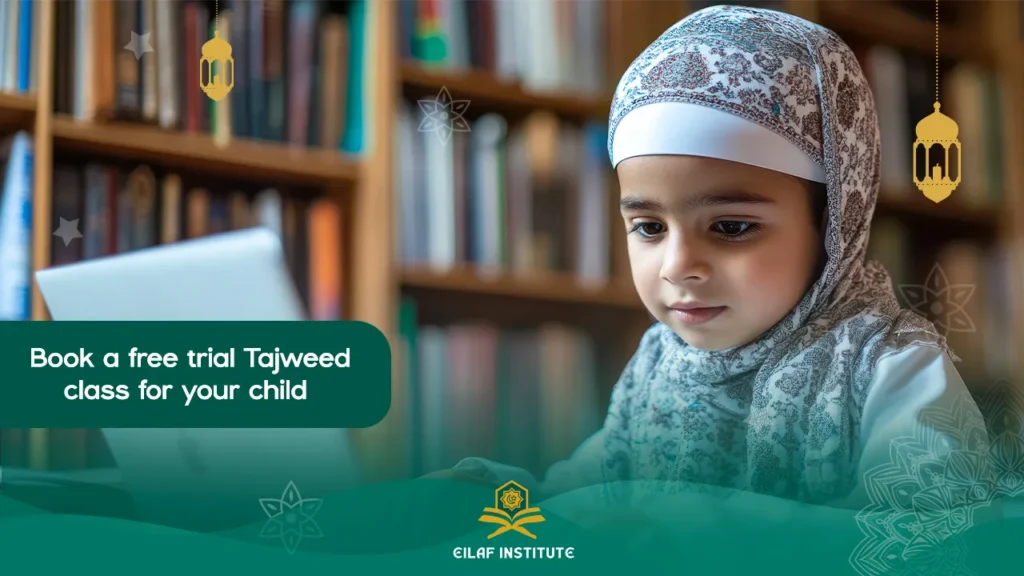
For Muslim families seeking quality Islamic education, online Quran classes for kids with Tajweed provide an effective way to help children learn proper Quran recitation in a supportive virtual environment. Eilaf Institute offers structured online Quran programs that emphasize correct Tajweed, interactive learning, and individualized guidance for every child. By mastering Tajweed from the beginning, children develop accurate pronunciation, greater confidence, and a deeper connection with the Quran. Flexible schedules, experienced teachers, and engaging lessons make it easier for families to incorporate consistent Quran learning into their daily routines.
Beyond Pronunciation: Why Online Quran Classes for Kids with Tajweed Matter From the Start
Learning the Quran with Tajweed ensures that the child recites the words exactly as they were revealed, preserving the linguistic integrity and the sacred meanings of the text. When kids learn quran online with tajweed for kids, they aren’t just reciting sounds; they are practicing a science that governs the duration of vowels, the points of articulation, and the rhythmic flow of the verses.
Building Correct Muscle Memory for Arabic Letters
The vocal cords and tongue of a child are highly flexible, making it the perfect time to establish the muscle memory required for difficult Arabic phonemes.
- Makharij Training: Children learn exactly where a sound originates, whether it is from the deep throat, the middle of the tongue, or the lips.
- Distinguishing Similar Sounds: Early training helps kids differentiate between letters like “Ta” (ت) and “Twa” (ط), preventing confusion that can change word meanings.
- Consistency in Recitation: Starting with Tajweed ensures that the child’s pace remains steady and disciplined, avoiding the common habit of rushing through verses.
Fostering a Deeper Connection to the Quranic Text
A child who recites with proper Tajweed naturally produces a more melodic and rhythmic sound, which has a profound emotional impact on their heart.
- Melodic Beauty: The rules of Madd (prolongation) and Ghunnah (nasalization) give the Quran its unique “song-like” quality that children find naturally attractive.
- Spiritual Respect: Teaching children that the Quran has specific rules for its recitation instills a sense of reverence and importance for the Book.
- Confidence in Prayer: When a child knows they are reciting correctly, they feel more confident participating in family prayers or leading their peers.
Decoding Readiness: What Age Should Kids Start Learning Tajweed?
Most educators agree that children can begin formal Tajweed between the ages of 5 and 7, though informal exposure to correct sounds can start much earlier. Readiness depends on the child’s ability to recognize basic Arabic letters and their willingness to mimic the teacher’s vocal movements.
The Early Childhood Phase (Ages 4–6)
At this stage, the focus is on online quran learning for kids through imitation rather than complex theoretical rules.
- Auditory Mimicry: Kids listen to the teacher and repeat the sounds, absorbing the “rhythm” of Tajweed without needing to know the names of the rules.
- Visual Recognition: Learning to identify the symbols (Harakaat) and how they affect the sound of a letter.
- Short Sessions: Lessons at this age should be brief—no more than 15 to 20 minutes—to match their natural attention spans.
The Structured Learning Phase (Ages 7 and Up)
By age seven, children have the cognitive maturity to understand the “why” behind Tajweed Rules for Kids.
- Conceptual Learning: They can begin to learn rules like Noon Sakinah, Tanween, and the different types of Madd.
- Independent Reading: Students move from following the teacher to identifying and applying rules on their own while reading from the Mushaf.
- Self-Correction: This is the age where children start noticing their own mistakes and can fix them with minimal guidance.
Inside the Virtual Classroom: What a Quality Program Looks Like
A premium program for Quran classes online for kids utilizes technology to bridge the gap between the teacher and the student, creating an environment that is often more focused than a traditional classroom. Quality programs prioritize engagement and ensure the child feels like an active participant in their learning journey.
Gamified Learning and Interactive Visual Tools
To keep young minds engaged, the best quran lessons for kids use digital tools that turn learning into an interactive experience.
- Digital Whiteboards: Teachers can draw articulation points or highlight specific rules in real-time.
- Point Systems and Rewards: Using stars, badges, or points to celebrate small wins, such as mastering a difficult letter or finishing a Surah.
- Interactive Slides: Using colorful presentations that break down the Tajweed Rules for Kids into visual, easy-to-digest modules.
Patient, Child-Centric Teaching Methodologies
The success of learn quran online for children depends heavily on the teacher’s ability to connect with the child emotionally.
- Positive Reinforcement: Using praise and encouragement rather than strict correction to build the child’s confidence.
- Tailored Pacing: Adjusting the speed of the lesson based on the child’s energy levels and grasp of the material on that specific day.
- Storytelling Integration: Connecting the verses being recited with the stories of the Prophets to make the lessons more meaningful.
Don’t wait—join Quran Recitation with Tajweed course today.
Red Flags: Signs of a Weak or Unqualified Online Institution
Parents must be vigilant when selecting an institution, as a poor start can discourage a child from religious learning altogether. A weak program often prioritizes quantity over the quality of the student’s experience.
Overcrowded Sessions vs. Lack of Individual Attention
If a session has too many students, the teacher cannot possibly hear every child’s unique pronunciation errors.
- The Silent Student: In large groups, shy children often hide and don’t participate, leading to stagnant progress.
- Unchecked Mistakes: Without 1-on-1 focus, a child might repeat a mistake for weeks before it is noticed.
- Generic Pacing: Large classes move at a single speed, which might be too fast for some or too slow for others.
Absence of Progress Tracking and Regular Feedback
A professional academy for online Quran learning for kids must provide parents with tangible evidence of growth.
- No Progress Reports: If the institution doesn’t offer monthly or quarterly evaluations, it is a sign of poor organization.
- Lack of Parent-Teacher Communication: You should have a clear channel to speak with the teacher about your child’s challenges and successes.
- Undefined Curriculum: If the teacher seems to be picking random pages every week without a clear syllabus, the child will lack a sense of accomplishment.
The Parent’s Checklist: Crucial Questions to Ask Before Enrolling Your Child
Before committing to a long-term schedule, conduct a thorough vetting process to ensure the program meets the standards required for learn quran online with tajweed for kids.
Vet the Teacher: Background and Experience with Children
A teacher’s credentials are just as important as their pedagogical approach with minors.
- “Do you have an Ijazah in Tajweed from a reputable source?”
- “How many years of experience do you have specifically teaching children online?”
- “What is your strategy for keeping a distracted child focused during the lesson?”
Test the System: Trial Sessions and Technical Support
The technical infrastructure is the backbone of successful quran classes online for kids.
- “Do you offer a free trial session to check the chemistry between the teacher and my child?”
- “What happens if there is a technical issue or a missed class due to internet problems?”
- “Is the audio quality clear enough for my child to hear the subtle nuances of Tajweed?”
Help your child recite with confidence through Quran Classes for Kids.
FAQ
At what age can kids start Tajweed classes?
Most children are ready for formal Tajweed Rules for Kids between the ages of 5 and 7. However, younger children (ages 3–4) can start with informal listening and mimicry to build their ears for the correct sounds.
How long are typical online Tajweed sessions for children?
For beginners, sessions are usually 20 to 30 minutes long. As the child grows older and their focus improves, sessions can extend to 45 or 60 minutes, though consistency across multiple days is always better than one long weekly session.
Do kids need to read Arabic before starting Tajweed?
Not necessarily. Many online quran classes teach Arabic reading (Noorani Qaida) and Tajweed simultaneously. This ensures that the child learns the correct pronunciation of letters from the very first day they learn to recognize them.